

AYURVEDIC SELF-MASSAGE
Oil massage may sound like a messy and complicated process best left to the spa, but once you've learned the basics, self-massage with oil starts to become second-nature and well worth the effort. In this article, we'll discuss the benefits of abhyanga, which oils to use, and how you can tailor your self-massage practice to balance each dosha
WHY IS MASSAGE RECOMMENDED IN AYURVEDA ?
• Musculoskeletal and nervous system health
• Proper circulation and lymph drainage
• Improved sleep patterns
• Softer, stronger skin
• Healthy vision
• Graceful aging
• Lustrous hair
• Firm, strong limbs
• Tone and vigor for the body's tissues
• Increased longevity
• Nourishment for the whole body
In Sanskrit, the word sneha can be translated as both “oil” and “love.” So in Ayurveda, there is an inherent connection between enveloping the body in oil and enveloping it in love. Both experiences can give a deep feeling of stability, warmth, and comfort. Sneha—oil and love—is sukshma, or “subtle.” This allows it to pass through minute channels in the body and penetrate deep layers of tissue ( dhatus ).
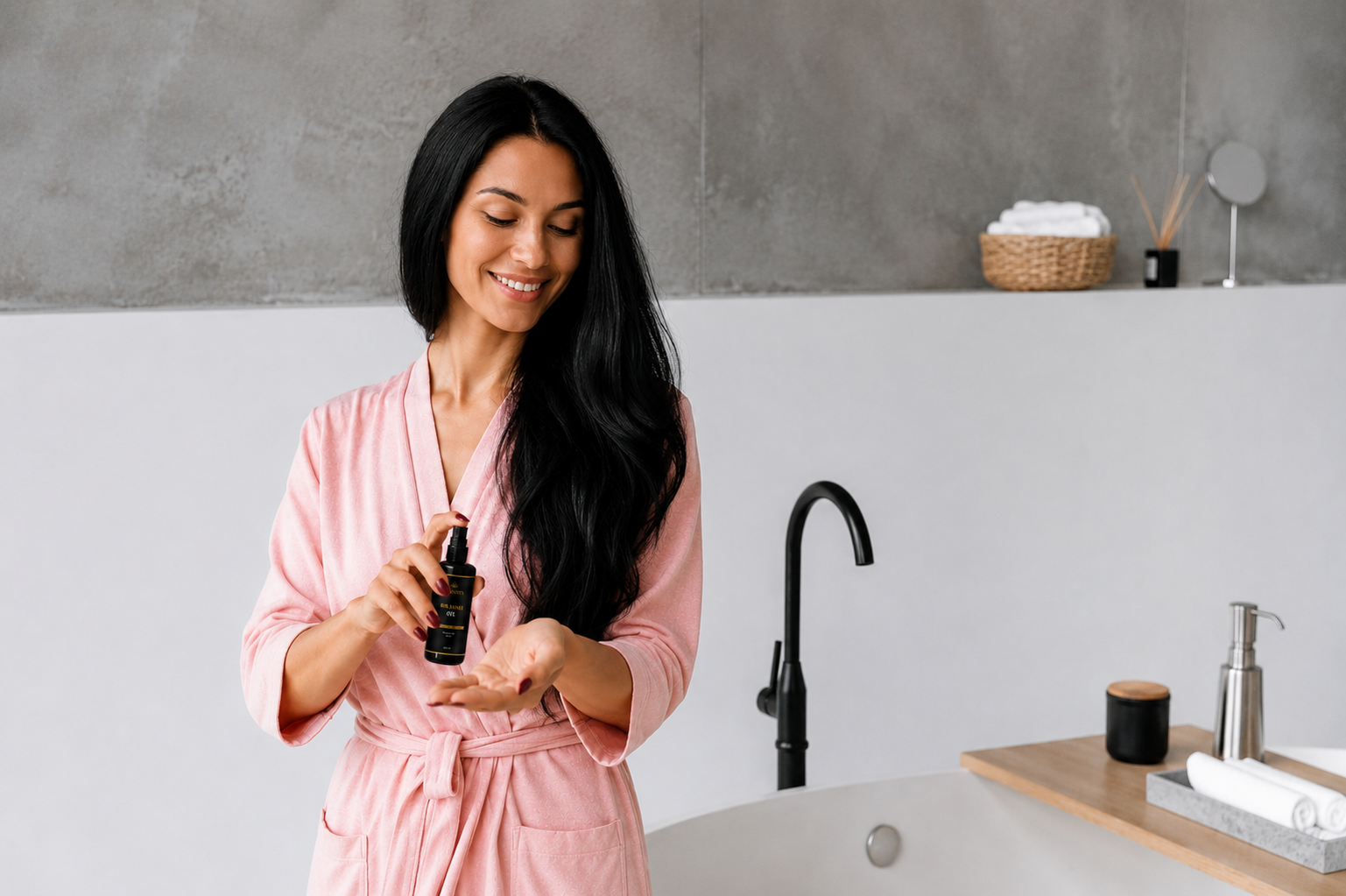
HOW TO DO SELF MASSAGE
Here is a wonderful self-massage routine offered by Dr. Claudia Welch that covers the key abhyanga massage steps. Try doing this routine in the morning for a vital day, or before bed for a more restful sleep
1. Put about 1/4–1/2 cup oil in an 8-ounce squeeze bottle.
2. Place the bottle of oil in a pan of hot water until the oil is pleasantly warm. You can also try some alternative methods to heating massage oil if you'd prefer.
3. Sit or stand comfortably in a warm room, on a towel that you don't mind ruining with oil accumulation. Make sure you are protected from any drafts.
4. Apply oil generously to your entire body.
5. Massage the oil into your body, beginning at the extremities and working toward the middle of your body. Use long strokes on the limbs and circular strokes on the joints. Massage the abdomen and chest in broad, clockwise, circular motions. On the abdomen, follow the path of the large intestine, moving up on the right side of the abdomen, then across, then down on the left side.
6. Massage the body for 5–20 minutes, with love and patience.
7. Give a little extra time and attention to massaging the oil into your scalp, ears, and feet, at least once a week. Apply oil to the crown of your head (adhipatimarma ) and work slowly outward in circular strokes. Oil applied to the head should be warm but not hot.
8. Put a couple drops of warm Ear Oil on the tip of your little finger or on a cotton ball and apply to the opening of the ear canal. (If there is any current or chronic discomfort in the ears don't do this without the recommendation of your health care practitioner).
9. When you massage your feet, be sure to wash them first when you shower, so you don't slip.
10. Enjoy a warm bath or shower. A vata, pitta, or kapha dusting powder can help rinse off the oil without drying out the skin. You can use a mild soap on the “strategic” areas.
11. When you get out of the bath, towel dry. Keep a special towel for drying off after your abhyanga because it will eventually get ruined due to the accumulation of oil.
12. Put on a pair of cotton socks (organic, if you can find them) to protect your environment from the residual oil on your feet.
13. Applying a high-quality essential oil to your wrists and neck can further support balance. If you are not familiar with which essential oils are balancing for each dosha :
• try rose or mitti for vata
• rose or khus for pitta
• hina or myrrh for kapha.
14. Enjoy.

